
08/27/11

Permalink Underground river 'Rio Hamza' discovered 4km beneath the Amazon


An aerial view of the Amazon river. (F. Lanting/Corbis)

Scientists estimate the subterranean river may be 6,000km long and hundreds of times wider than the Amazon.

Covering more than 7 million square kilometres in South America, the Amazon basin is one of the biggest and most impressive river systems in the world. But it turns out we have only known half the story until now.

Brazilian scientists have found a new river in the Amazon basin – around 4km underneath the Amazon river. The Rio Hamza, named after the head of the team of researchers who found the groundwater flow, appears to be as long as the Amazon river but up to hundreds of times wider. Both the Amazon and Hamza flow from west to east and are around the same length, at 6,000km. But whereas the Amazon ranges from 1km to 100km in width, the Hamza ranges from 200km to 400km. The underground river starts in the Acre region under the Andes and flows through the Solimões, Amazonas and Marajó basins before opening out directly into the depths of the Atlantic Ocean.

The Amazon flows much faster than the Hamza, however, draining a greater volume of water. Around 133,000m3 of water flow through the Amazon per second at speeds of up to 5 metres per second. The underground river's flow rate has been estimated at around 3,900m3 per second and it barely inches along at less than a millimetre per hour.


11/18/09

Permalink Face-Off With a Deadly Predator

Paul Nicklen describes his most amazing experience as a National Geographic photographer - coming face-to-face with one of the Arctic's most vicious dangerous predators.


11/12/09

Permalink University study: CO2 levels remained constant since 1850

A central tenet of “climate change” dogma holds that increased emissions (2 billion tons a year in 1850 to 35 billion tons a year now) leads to greater CO2 levels in the atmosphere. But a new study from the University of Bristol could shake up traditional assumptions. The study suggests that CO2 levels have remained constant since 1850. New data show that the balance between the airborne and the absorbed fraction of carbon dioxide has stayed approximately constant since 1850, despite emissions of carbon dioxide having risen from about 2 billion tons a year in 1850 to 35 billion tons a year now.


11/10/09

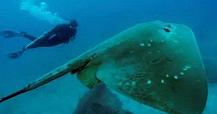
Permalink First film of a 'giant' stingray -Video

It is one of the rarest giants of the ocean, and it has been caught on film for the first time. An underwater camera crew filming for the BBC recorded a smalleye stingray swimming off the coast of Mozambique. The smalleye stingray is the largest of all 70 species of stingray, attaining widths of more than 2m. The elusive creature, first discovered in 1908, has only ever been seen alive off the coast of Tofo in southern Mozambique.

Footage of the fish will be broadcast on BBC Two at 2000GMT on Wednesday 11 November, as part of the programme Andrea: Queen of the Mantas for the BBC documentary series Natural World.