



The FBI Entraps US Citizens To Feign Success Against Terror
Rehanna Jones-Boutaleb
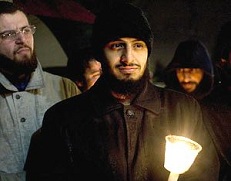
Young Muslim men attend an interfaith vigil in support of the Muslim community in Corvallis, Ore. A mosque that was occasionally attended by FBI entrapment target Mohamed Mohamud suffered arson after inflammatory media coverage. (Photo credit: Motoya Nakamura / The Oregonian)
On August 28, 2008, two childhood friends from Midland, Texas, Bradley Crowder and David McKay, traveled north to join thousands of protesters at the 2008 Republican National Convention (RNC). In the company of six Austin activists, Crowder and McKay were ready for adventure, and prepared, in Crowder's words, to protest to "change the world." What began as a journey of hope, however, ended in sudden catastrophe. Crowder and McKay's efforts to mark their opposition to the Republican administration and the U.S. involvement in Iraq resulted in multiple charges of domestic terrorism and a high- stakes entrapment defense in federal court. What the "Texas Two" hadn't realized in Minnesota was that their trusted comrade, Brandon Michael Darby - the very activist to whom they had looked for inspiration and guidance - was in fact an FBI informant.
Tracing Crowder and McKay's saga from its very origins, the 2011 documentary Better this World cunningly unveils the intricacies of the two protestors' federal trials, as well as the media sensation they precipitated. The film, which is scheduled to air nationally on PBS's "POV" series, not only provides a nuanced perspective of two alleged cases of domestic terrorism but also cuts to the heart of the "war on terror" and its effect upon civil liberties.
Aiming to go beyond the "nice-kids-turned-domestic- terrorists" narrative propagated by mainstream media sources, film-makers Kelly Galloway and Kelly Duane de la Vega have turned their attention to the viewpoints of the key players themselves: Crowder, McKay, and Darby. Although both directors are clearly sympathetic toward the convicted Texas youths, they take care to interview multiple FBI agents and prosecutors, providing viewers with conflicting approaches to the trials. The result is a documentary thriller that stands as both a compelling character study and a necessary reminder of the broader themes behind McKay and Crowder's testimony, namely the post-9/11 security apparatus and the use, and abuse, of informants in the government's "war on terror."