













Imperialism and Imperial Barbarism
James Petras
The James Petras Website

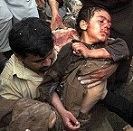
A US soldier poses with his "trophy". Gul Mudin, the son
of a farmer, was killed on Jan. 15, 2010. (Der Spiegel)
[PDF] Imperialism, its character, means and ends has changed over time and place. Historically, western imperialism, has taken the form of tributary, mercantile, industrial, financial and in the contemporary period, a unique ‘militarist-barbaric’ form of empire building. Within each ‘period’, elements of past and future forms of imperial domination and exploitation ‘co-exist’ with the dominant mode. For example , in the ancient Greek and Roman empires, commercial and trade privileges complemented the extraction of tributary payments. Mercantile imperialism, was preceded and accompanied initially by the plunder of wealth and the extraction of tribute, sometimes referred to as “primitive accumulation”, where political and military power decimated the local population and forcibly removed and transferred wealth to the imperial capitals. As imperial commercial ascendancy was consolidated, manufacturing capital increasingly emerged as a coparticipant; backed by imperial state policies manufacturing products destroyed local national manufacturers gaining control over local markets. Modern industrial driven imperialism, combined production and commerce, both complemented and supported by financial capital and its auxiliaries, insurance, transport and other sources of “invisible earnings”.
Under pressure from nationalist and socialist anti-imperialist movements and regimes, colonial structured empires gave way to new nationalist regimes. Some of which restructured their economies, diversifying their productive systems and trading partners. In some cases they imposed protective barriers to promote industrialization. Industrial-driven imperialism, at first opposed these nationalist regimes and collaborated with local satraps to depose industrial oriented nationalist leaders. Their goal was to retain or restore the “colonial division of labor” – primary production exchanged for finished goods. However, by the last third of the 20th century, industrial driven empire building, began a process of adaptation, “jumping over tariff walls”, investing in elementary forms of ‘production’ and in labor intensive consumer products. Imperial manufacturers contracted assembly plants organized around light consumer goods (textiles, shoes, electronics).
Basic changes in the political, social and economic structures of both the imperial and former colonial countries, however, led to divergent imperial paths to empirebuilding and as a consequence contrasting development performances in both regions.