

Druze Leader Jumblatt Backs Hezbollah

Stephen Lendman

"Expect parliamentary consultations delayed so Washington and France can apply intense pressure, intimidation and coercion to force enough Jumblatt bloc member backing for Hariri, letting his March 14 coalition retain its majority."

Two recent articles discussed Lebanon's present turmoil in detail, accessed through the following links, here and here.

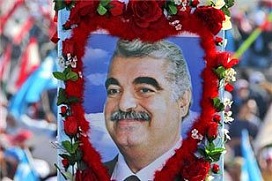
Conditions there remain fluid. Key was a Washington/French pressured UN-backed Special Tribunal's sealed January 17 indictment of those allegedly responsible for former Prime Minister Rafik Hariri's February 14, 2005 killing, preceded by Hezbollah's January 12 pulling out of Lebanon's coalition government causing it to collapse. The above linked articles explain both events in detail, including who, in fact, likely killed Hariri, and implications going forward.

Two blocks comprised Lebanon's misnamed "national unity" government:

the opposition March 8 alliance, including (Shia) Hezbollah, (Shia) Amals, and (secular, mainly Maronite Christian) Free Patriotic Movement and with 57 seats; and
the majority March 14 Sunni/Phalangist Christian coalition (including independents, lead by now caretaker Prime Minister Saad Hariri) with 60.

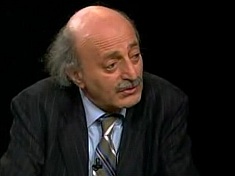
Walid Jumblatt's secular, officially non-sectarian Druze Progressive Socialist Party (PSP) 11 seat bloc holds decisive balance of power in Lebanon's 128 seat parliament. On January 21, he chose sides, Al Jazeera headlining, "Lebanon's Jumblatt backs Hezbollah," saying:

His decision "could give (Hezbollah) and its allies a veto over who becomes the country's next prime minister," Jumblatt saying he wished only to preserve Lebanon's stability, adding:

"I am announcing the right political stand....by assuring the steadfastness of the (PSP) alongside Syria and the resistance (Hezbollah)."

Heightened Tensions after Hariri Indictment Announced

Stephen Lendman

A previous article addressed Lebanon's turmoil, accessed through this link.

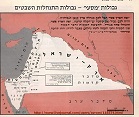
It discussed Israel's history of terrorizing Lebanon through decades of belligerent interventions as early as 1954, as well as thousands of terrorist acts against a nonviolent state whose misfortune is being Israel's neighbor. It also discussed false accusations against Hezbollah, a legitimate part of Lebanon's government, not a terrorist organization as Israel and America claim.

Targeted Killings, An Israeli Speciality

Not covered was Israel's history of targeted assassinations, way predating its founding during the Mandatory Palestine period when Jewish terror groups targeted Jews, Brits and Arabs. Involved were paramilitary Hagana members, Irgun headed by future prime minister Menachem Begin, and Lehi (also called the Stern Gang) led by another future prime minister, Yitzhak Shamir, rogue killers before entering politics.

In November 1944, Lehi assassinated Lord Moyne, Britain's Middle East minister of state, near his home in Cairo. In September 1948, it also killed UN mediator Folke Bernadotte in Jerusalem, five months after Israel was established. Yitzhak Shamir personally approved of shooting him to death.

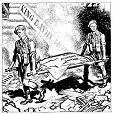
In July 1946, Irgun bombed the King David Hotel, massacring 92 Brits, Arabs and Jews, wounding 58 others, an operation future prime minister David Ben-Gurion approved as head of the Jewish Agency at the time.

Before and after May 1948, many thousands of targeted killings occurred or were attempted, most little remembered today except to relatives and their descendants. Little wonder Israel's history is so bloodstained, involving individual and mass killings.


The Fateful Geological Prize Called Haiti

F. William Engdahl
Global Research

President becomes UN Special Envoy to earthquake-stricken Haiti.
A born-again neo-conservative US business wheeler-dealer preacher claims Haitians are condemned for making a literal ‘pact with the Devil.’
Venezuelan, Nicaraguan, Bolivian, French and Swiss rescue organizations accuse the US military of refusing landing rights to planes bearing necessary medicines and urgently needed potable water to the millions of Haitians stricken, injured and homeless.

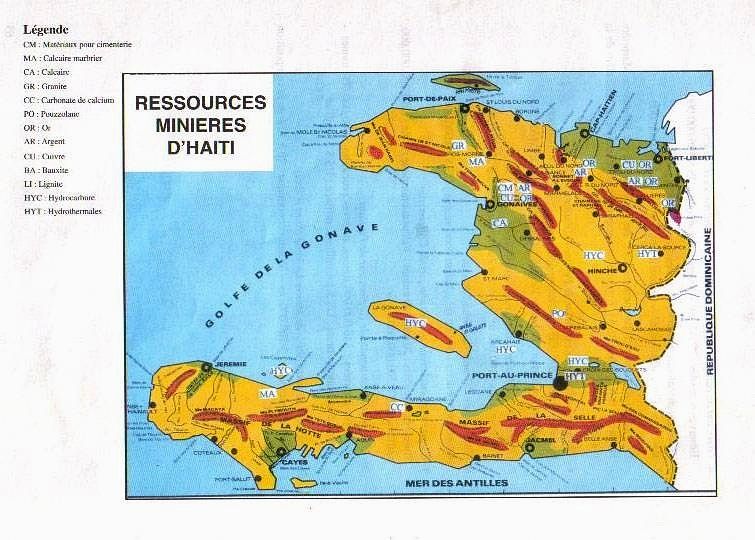
Behind the smoke, rubble and unending drama of human tragedy in the hapless Caribbean country, a drama is in full play for control of what geophysicists believe may be one of the world’s richest zones for hydrocarbons-oil and gas outside the Middle East, possibly orders of magnitude greater than that of nearby Venezuela.

Haiti, and the larger island of Hispaniola of which it is a part, has the geological fate that it straddles one of the world’s most active geological zones, where the deepwater plates of three huge structures relentlessly rub against one another—the intersection of the North American, South American and Caribbean tectonic plates. Below the ocean and the waters of the Caribbean, these plates consist of an oceanic crust some 3 to 6 miles thick, floating atop an adjacent mantle. Haiti also lies at the edge of the region known as the Bermuda Triangle, a vast area in the Caribbean subject to bizarre and unexplained disturbances.

This vast mass of underwater plates are in constant motion, rubbing against each other along lines analogous to cracks in a broken porcelain vase that has been reglued. The earth’s tectonic plates typically move at a rate 50 to 100 mm annually in relation to one another, and are the origin of earthquakes and of volcanoes. The regions of convergence of such plates are also areas where vast volumes of oil and gas can be pushed upwards from the Earth’s mantle. The geophysics surrounding the convergence of the three plates that run more or less directly beneath Port-au-Prince make the region prone to earthquakes such as the one that struck Haiti with devastating ferocity on January 12.