








Why World War II ended with Mushroom Clouds

Jacques R. Pauwels
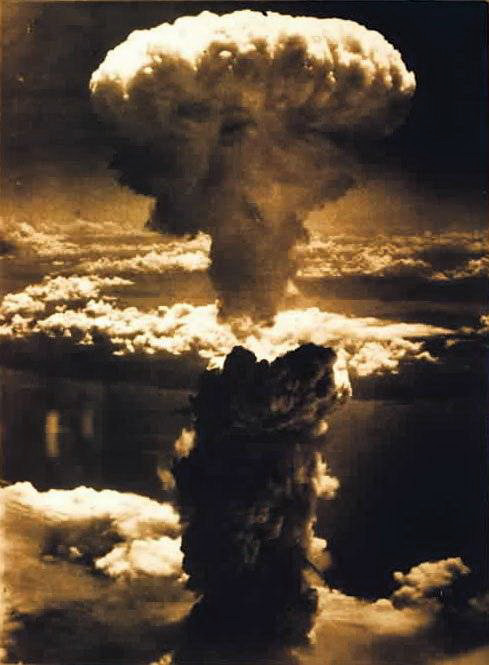
65 years ago, August 6 and 9, 1945: Hiroshima and Nagasaki

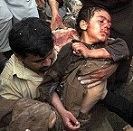
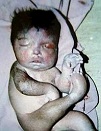
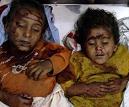
On Monday, August 6, 1945, at 8:15 AM, the nuclear bomb ‘Little Boy” was dropped on Hiroshima by an American B-29 bomber, the Enola Gay, directly killing an estimated 80,000 people. By the end of the year, injury and radiation brought total casualties to 90,000-140,000.”[1]

On August 9, 1945, Nagasaki was the target of the world's second atomic bomb attack at 11:02 a.m., when the north of the city was destroyed and an estimated 40,000 people were killed by the bomb nicknamed ‘Fat Man.’ The death toll from the atomic bombing totalled 73,884, as well as another 74,909 injured, and another several hundred thousand diseased and dying due to fallout and other illness caused by radiation.”[2]

In the European Theatre, World War II ended in early May 1945 with the capitulation of Nazi Germany. The “Big Three” on the side of the victors – Great Britain, the United States, and the Soviet Union – now faced the complex problem of the postwar reorganization of Europe. The United States had entered the war rather late, in December 1941, and had only started to make a truly significant military contribution to the Allied victory over Germany with the landings in Normandy in June 1944, less than one year before the end of the hostilities. When the war against Germany ended, however, Washington sat firmly and confidently at the table of the victors, determined to achieve what might be called its “war aims.”

As the country that had made the biggest contribution and suffered by far the greatest losses in the conflict against the common Nazi enemy, the Soviet Union wanted major reparation payments from Germany and security against potential future aggression, in the form of the installation in Germany, Poland and other Eastern European countries of governments that would not be hostile to the Soviets, as had been the case before the war. Moscow also expected compensation for territorial losses suffered by the Soviet Union at the time of the Revolution and the Civil War, and finally, the Soviets expected that, with the terrible ordeal of the war behind them, they would be able to resume work on the project of constructing a socialist society. The American and British leaders knew these Soviet aims and had explicitly or implicitly recognized their legitimacy, for example at the conferences of the Big Three in Tehran and Yalta. That did not mean that Washington and London were enthusiastic about the fact that the Soviet Union was to reap these rewards for its war efforts; and there undoubtedly lurked a potential conflict with Washington’s own major objective, namely, the creation of an “open door” for US exports and investments in Western Europe, in defeated Germany, and also in Central and Eastern Europe, liberated by the Soviet Union.



Closing out dissent

Bob Carter

The phenomena of disinvitation and the brotherhood of silence

Scientists who venture to make independent statements in public about environmental myths soon come to learn about two post-modern-science tactics used to suppress their views – namely, disinvitation and the application of a brotherhood of silence. How these tactics work is explained in this article.

The modus operandi

A member of the organising committee for one or another conference comes to one of my talks, or chances to meet a friend who has attended. Enthusiasm thereby arises for me to speak at the conference that is being planned. Prompted by the member, the conference committee approves an invitation, which I accept. Later, the Council or governing body of the society in question gets to “rubber stamp” the conference program and someone says: “Bob Carter as a plenary speaker! You must be joking”. The disinvitation follows, sometimes well after the talk has been written and travel booked.

In a variation on this, earlier this year I was invited by our ABC to contribute an opinion piece about climate change to their online blog site, The Drum. The piece was duly written and tendered, only to be declined.

Similarly, strong control has long been exercised by public broadcasters ABC and SBS against the appearance of independent scientists on their TV and radio news and current affairs programs. I first encountered this in 2007, when I participated in a broadcast discussion about Martin Durkin’s epoch-making documentary film, The Great Global Warming Swindle [Alternative link here.]. Before the broadcast I had the astonishing experience of being successively invited, disinvited, prevaricated with and then finally invited to participate again, as competing interests inside the ABC battled, as they obviously saw it, to control the outcome of the panel discussion.

I have generally viewed these and similar experiences over the years as amusing irritations that go with the territory of scientific independence. But the matter starts to become offensive, and indeed sinister, when it transpires that scientists from CSIRO, and other IPCC-linked research groups in Australia, have been behind particular disinvitations; or, even more commonly, have refused to participate in public debate on climate change.

The same self-appointed guardians of the sanctity of IPCC climate propaganda also strive ceaselessly to prevent invitations from being issued in the first place. For example, when it was suggested to a Sydney metropolitan university that I might give a talk on the campus, their Distinguished (sic) Professor of Sustainability responded that:

he would not be interested in allowing anyone to present a point of view which did not support the fact that human-generated carbon dioxide has caused global warming.

What?


Palestinians Denied Access to Water

Stephen Lendman


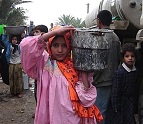
Sewage Contaminated Water from a Palestinian Well.
Photo: Israel’s Final Act of Genocide: Israel rations
Palestinians to trickle of water. (FHR/AFP)

According to OCHA (the UN Office for the Coordination of Humanitarian Affairs), Palestinians face a serious water crisis, being denied access to their own resources.

Cara Flowers with the Emergency Water, Sanitation and Hygiene Group (EWASH - a coalition of almost 30 water and sanitation sector organizations in Occupied Palestine) said many vulnerable communities in Israeli-controlled Area C (covering 60% of the West Bank) are hardest hit, the Palestinian Water Authority (PWA) having limited say over its own resources, ones Israel uses itself, an international water expert saying:

It's "easy (making) the desert bloom by using someone else's water (and) denying them access to their fair share...." In some areas, it's easier denying them none except what they can obtain by other means or illegally.

In 2009, Amnesty International (AI) addressed the problem in its report titled, "Troubled Waters - Palestinians Denied Fair Access to Water," [.pdf] explaining that

water is life, stealing it a crime, without it "we can't live; not us, not the animals, or the plants," said Fatima al-Nawajah, a South Hebron Hills area resident.

Throughout the Occupied Territories, the problem is longstanding, exacerbated by Israeli water policies, denying Palestinians for themselves, preventing their right to their own resources.

"The inequality in access....between Israelis and Palestinians is striking," especially in summer when needs are greatest. Palestinians consume about 70 liters per capita a day (the lowest amount in the region), well below the WHO-recommended 100 liter minimum, and in some rural areas much less, as little as 20 liters.

In contrast, Israelis use about 300 liters, denying Palestinians an equitable share, including from the underground Mountain Aquifer and Jordan River surface water, reserved solely for Jews.


Attacking Iran: A Pending Mistake

Political Theatrics

Since the year 1945, the United States of America has attempted to overthrow at least 50 foreign governments – including most recently that of Iran. This variety of political play-making is not just bad diplomatic policy; when US President Obama signed into law, on July 1st 2010, sanctions against Iran he was not making a careless mistake. The United States of America’s foreign policy is comparably similar to that of a cold, calculated killer.

Economic Strangulation And Military Aggression Against Iran

Sanctions are silent but terribly deadly, killing assumed ‘combatants’ and noncombatants in one cowardly sweep – take for example US sanctions against Iraq: Researcher Richard Garfield estimated that “a minimum of 100,000 and a more likely estimate of 227,000 excess deaths among young children from August 1991 through March 1998″ from all causes including sanctions.

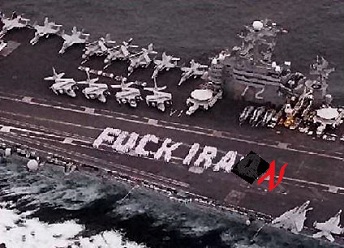
The Obama Administration has casually passed off US sanctions against Iran as “peaceful” measures – a “peaceful” economic asphyxiation meant to heavily impact Iran’s response. Moreover, in late June some 12 US warships and at least one Israeli corvette crossed through the Suez Canal accompanying three naval squadrons – blatant military intimidation coupled with aggressive imperialist rhetoric.


Another Cakewalk -This Time Against Iran...

Philip Giraldi

"The reality is that an Israeli attack on Iran will trigger an all-out war in the region, which will quickly include the United States."

Everyone who is concerned that yet another war in the Middle East could wreck what remains of the United States economy and probably strip away even more of our liberties should be troubled by the numerous calls for war against Iran. No one believes that Iran is anything but a nation that is one small step away from becoming a complete religious dictatorship, but the country has a small economy, a tiny defense budget, and, as far as the world’s intelligence services can determine, neither nuclear weapons nor a program to develop them. Labeling the Iranian president Mahmoud Ahmadinejad as a new Hitler and describing the regime as "Islamofascist" is convenient but hardly conveys the reality of the complex political interaction taking place inside today’s Iran. Ironically, the animus directed against Tehran relates not so much to what it is doing as to what its government might do, hardly an adequate pretext for going to war and a standard of behavior that many countries in the world would fail.

A resolution (HR 1553) is making its way through Congress that that would endorse an Israeli attack on Iran, which would be going to war by proxy as the US would almost immediately be drawn into the conflict when Tehran retaliates. The resolution provides explicit US backing for Israel to bomb Iran, stating that Congress supports Israel’s use of "all means necessary…including the use of military force." The resolution is non-binding, but it is dazzling in its disregard for the possible negative consequences that would ensue for the hundreds of thousands of US military and diplomatic personnel currently serving in the Near East region. Even the Pentagon opposes any Israeli action against Iran, knowing that it would mean instant retaliation against US forces in Iraq and also in Afghanistan. The resolution has appeared, not coincidentally, at the same time as major articles by leading neoconservatives Reuel Marc Gerecht and Bill Kristol calling for military action. Both Gerecht and Kristol insist that action by Israel or the US would be better than doing nothing and both downplay the ability of Iran to counter-attack effectively. One might note that both Kristol and Gerecht have been dramatically wrong in the past, most notably in their analyses of developments in Iraq.