Johann Hari
By now, you probably think your opinion of Goldman Sachs and its swarm of Wall Street allies has rock-bottomed at raw loathing. You're wrong. There's more. It turns out the most destructive of all their recent acts has barely been discussed at all. Here's the rest. This is the story of how some of the richest people in the world - Goldman, Deutsche Bank, the traders at Merrill Lynch, and more - have caused the starvation of some of the poorest people in the world, just so they could make a fatter profit.
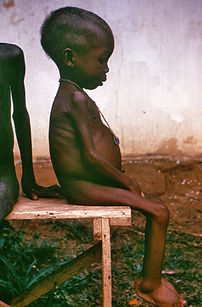
It starts with an apparent mystery. At the end of 2006, food prices across the world started to rise, suddenly and stratospherically. Within a year, the price of wheat had shot up by 80 percent, maize by 90 percent, and rice by 320 percent. In a global jolt of hunger, 200 million people - mostly children - couldn't afford to get food any more, and sank into malnutrition or starvation. There were riots in over 30 countries, and at least one government was violently overthrown. Then, in spring 2008, prices just as mysteriously fell back to their previous level. Jean Ziegler, the UN Special Rapporteur on the Right to Food, called it "a silent mass murder", entirely due to "man-made actions."
Earlier this year I was in Ethiopia, one of the worst-hit countries, and people there remember the food crisis like they were hit by a tsunami. "It was very painful," a woman my age called Abeba Getaneh, told me. "My children stopped growing. I felt like battery acid had been poured into my stomach as I starved. I took my two daughters out of school and got into debt. If it had gone on much longer, I think my baby would have died."
Most of the explanations we were given at the time have turned out to be false. It didn't happen because supply fell: the International Grain Council says global production of wheat actually increased during that period, for example. It isn't because demand grew either. We were told the swelling Chinese and Indian middle classes were pushing it up, but as Professor Jayati Ghosh of the Centre for Economic Studies in New Delhi has shown, demand from those countries for them actually fell by 3 percent over this period.
There are some smaller explanations that account for some of the price rise, but not all. It's true the growing demand for biofuels was gobbling up much-needed agricultural land - but that was a gradual process that wouldn't explain a violent spike. It's true that oil prices increased, driving up the cost of growing and distributing food - but the evidence increasingly shows that wasn't the biggest factor.